





















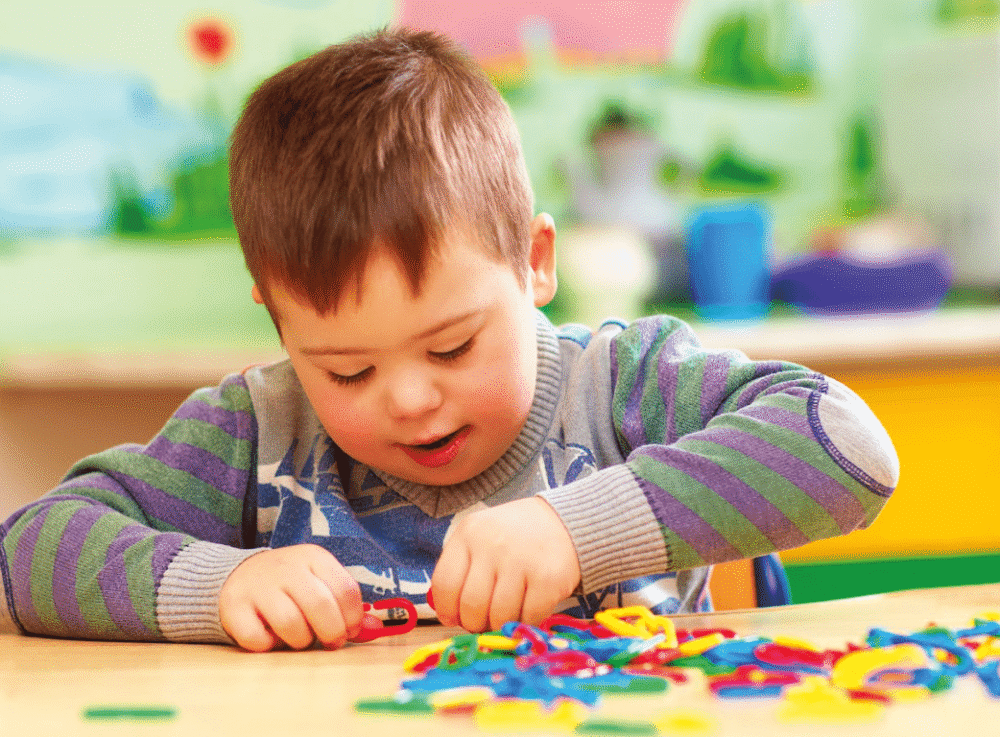
Julie Pearson and Val Pope look at the practical implications of the Early Years Foundation Stage (EYFS) for children with SEN, their families and educators.
The Early Years Foundation Stage is the statutory framework of standards that school and childcare providers must meet for the learning, development and care of children from birth to five years in England. Last year, a survey by the Early Years Alliance found that less than half of families are confident in their understanding of the EYFS, and that many families would like more information about how to support their child’s SEND needs. Early years educators and professionals need to work closely with families to support their knowledge and understanding of the EYFS and the statutory requirements. Better outcomes are achieved when children have positive relationships with their parents, the parents are engaged in their education and consistently supportive throughout their childhood and have positive partnerships with their child’s early years setting or school.

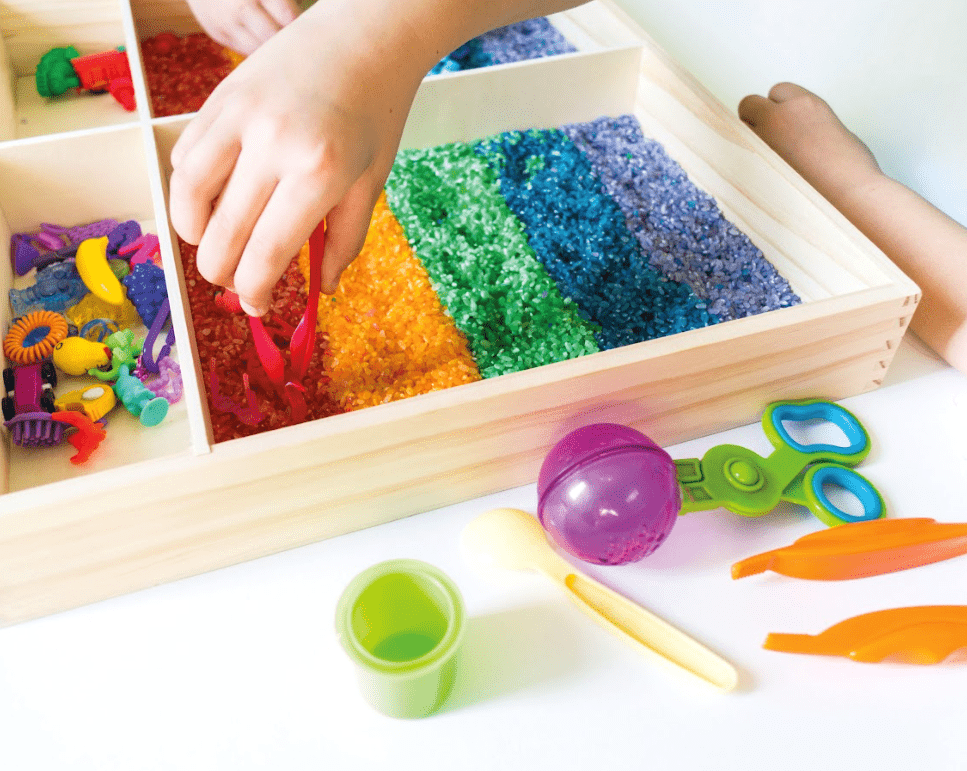
Families are the experts on their own children, therefore a process that involves open and respectful communication is an important element of supporting the child both in the setting and in the home learning environment, and working together as families and early years settings helps to meet children’s needs and provide ongoing learning support.
By communicating what children enjoy in their education setting and at home, educators and families can plan for children’s interests and support their learning in a way that’s unique to the child. Sharing information from other professionals who may be involved in the child’s life as well, such as occupational therapists and speech and language therapists, can also help embed a consistent approach to support young children’s learning and development across the home and the setting. The local Family Hub is a good starting point for finding out about other support your child and your family can access.
Early identification. Inclusive practice and appropriate and effective support for children with SEND should be an integral and fundamental element of providers’ delivery of the EYFS. Those who work with young children should notice any emerging difficulties the children may have and respond to these and any other concerns they may have about a child’s developmental progress. The key person in an early years setting can gain a good understanding of a child’s developmental stage and support with activities and home learning ideas. Working closely with families will promote early identification and plan, do, review (a graduated approach) can be used in partnership to support children’s learning at home and in the setting to ensure a joined-up approach that keeps the voice of the child and the family at the centre.
The SENCO. It is the SENCO’s job to be aware of the legal requirements for children with SEND, and to liaise with parents and other professionals for children with additional needs. The SENCO role is to ensure there is high quality practice which meets the needs of all children with SEND, and that relevant information about a child is collated and recorded appropriately. This means ensuring that SEND Support Plans (IEPs) are in place and are regularly reviewed, all members of staff are aware of each child’s needs and the strategies in place to support each child, and that parents are always consulted in planning and decisions which affect outcomes for their child.
Understanding and supporting behaviour. Behaviour is communication, therefore understanding what children are trying to communicate through their behaviour is important. Close partnership working can help everyone to understand what it is that a child may be communicating through their behaviour, and therefore understand ways that this can be positively and consistently supported in the home and in an early years setting, thus having a positive impact on children’s wellbeing.
When finding it difficult to understand behaviour it may be useful to follow the ABC approach. This is broken down into the A-antecedent (what happened just before the behaviour was observed), the observed B-behaviour and then the C-consequence (what happened after). What did the child achieve through the behaviour? Was it to avoid something or to get something? Consequences can either reinforce the behaviour or discourage it. For example, if a child receives more attention if they do something negative than they do when their behaviour is positive, they are more likely to repeat the negative behaviour in future.
Keeping a diary between the setting and home and recording this information can really help. It could be something that happened at the setting or in the morning before the child arrived that was the antecedent, therefore this will help families and educators to work together to build up a bigger picture. It is not unusual for some behaviours to be observed at home and not in the setting, and vice versa, therefore this regular communication approach can help everyone to work together to understand the child’s need, avoid any triggers for negative behaviour, and put consistent support in place helping to support the child’s emotional wellbeing.


There are a number of things that can impact behaviour such as environment (this may be at home or in the setting), other people that support the child, adults own emotional regulation and children’s developmental stage, together adults working with children can use the ABC approach to consider all of these elements, for example considering whether the child feel emotionally secure, is the environment enabling for them and does it meet all of their needs or is it over stimulating, and can children access what they need when they need it. This knowledge that is built of the child will help to introduce individualised strategies for children as needed.
Some children, especially those with sensory processing disorders, may be extra sensitive to sensory input. Sensory overload occurs when the brain receives more input from the senses, such as light, sound, touch, taste, or smell, than it can effectively process at the time. When overwhelmed, the brain may react as if facing a threat, triggering a fight, flight, or freeze response. In children, this can lead to the child becoming deregulated or distressed which may be misinterpreted as bad behaviour, rather than the sign of sensory overwhelm that it is.
Calm boxes are a useful tool for supporting children’s emotional regulation—these can be replicated at home and in the early years setting, where familiar items can support a child who does feel such sensory overwhelm. The purpose of a calm box is to support a child who is feeling an intense emotion such as anger, frustration, or who is just feeling overwhelmed in the moment. Calm boxes can include objects that reflect that child’s unique and individual needs, such as sensory toys (fidget toys, stress balls, textured objects), paper and craft materials, calming music or nature sounds and headphones, things to smell, bubble wrap, a glitter tube, Playdoh and bubbles.
The voice of the child. Hearing the voice of the child is essential to supporting their wellbeing, safety and learning. For some children this may be a verbal voice, for others this may be non-verbal, but however the child communicates, it is important that they feel heard and understood. In an early years setting the child’s key person is essential for this, and working alongside families to understand children’s unique needs, will help them to pick up on when things are not right for the child, and support access to the things they most enjoy. Tools such as visual timetables, now and next boards, and sand timers, can all support positive communication and are things that can be introduced to be consistent in the home and the setting to help the child feel heard and understood, this will also help some children to communicate their needs.

Author: Julie Pearson and Val Pope


Julie Pearson
Julie Pearson is a Children's Services Manager at the Early Years Alliance.
Facebook: @EYAlliance
familycorner.co.uk is the Early Years Alliance's family website which offers free expert insights, activity ideas and online learning sessions on key areas of child development for parents and carers of under-fives

Val Pope
Val Pope is a Business Manager at the Early Years Alliance.
Facebook: @EYAlliance
familycorner.co.uk is the Early Years Alliance's family website which offers free expert insights, activity ideas and online learning sessions on key areas of child development for parents and carers of under-fives