













Learning outside the classroom can be wonderfully rewarding for young people with additional needs, says Catherine Wood.
Outdoor learning activities which are flexible and inclusive can be a vital and unique part of young people’s education, helping them grow in independence and confidence. Activities like outdoor cooking, gardening, nature walks, bushcraft, expeditions and camping offer opportunities for young people to explore who they are and develop essential life skills.

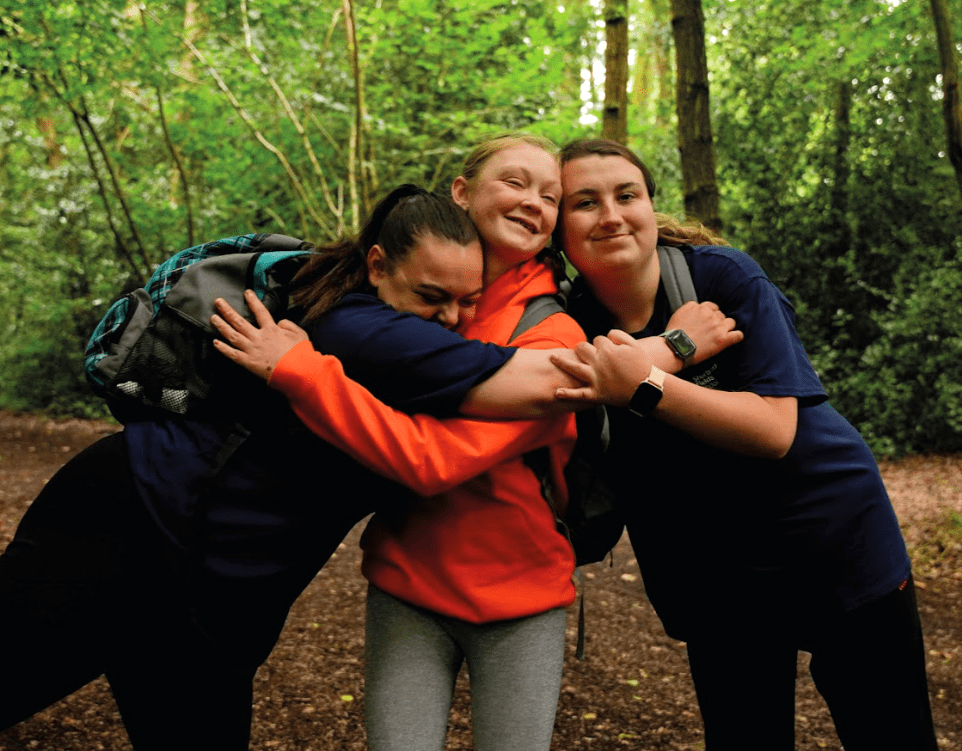
For young people with additional needs, planning and delivering learning experiences outside the classroom require flexibility and an inclusive lens. Young people should be consulted, with the best options explored for each young person, and acknowledging their unique needs and strengths. Parents and carers can also be a big support here—they can offer valuable insights about young people’s needs and help teach young people skills in a relaxed home environment before the learning activity begins.
Familiarity and predictability can be especially important for some young people when taking part in learning outside the classroom, such as those who are neurodivergent or who experience anxiety. Using familiar locations or routes can help build confidence and reduce uncertainty. The sensory environment should also be considered—nature-based settings often provide a calming and restorative atmosphere in comparison to urban ones. Location accessibility, toilets, and emergency escape routes should also be front of mind in planning.

For team-based activities, groups should be formed early in the planning process, with open conversations about individual needs, preferences and goals. For some students, the outdoor learning goal may focus on a physical activity, like walking, wheeling or frame running, while for others, the focus may be on developing teamwork, leadership skills, or self-expression.
Some students may need prompts, or support from staff, or a buddy, to plan and organise the outdoor learning activity. For nature walks or expeditions, adapted tools and technology can be utilised for navigation, such as picture route cards and talking compasses.

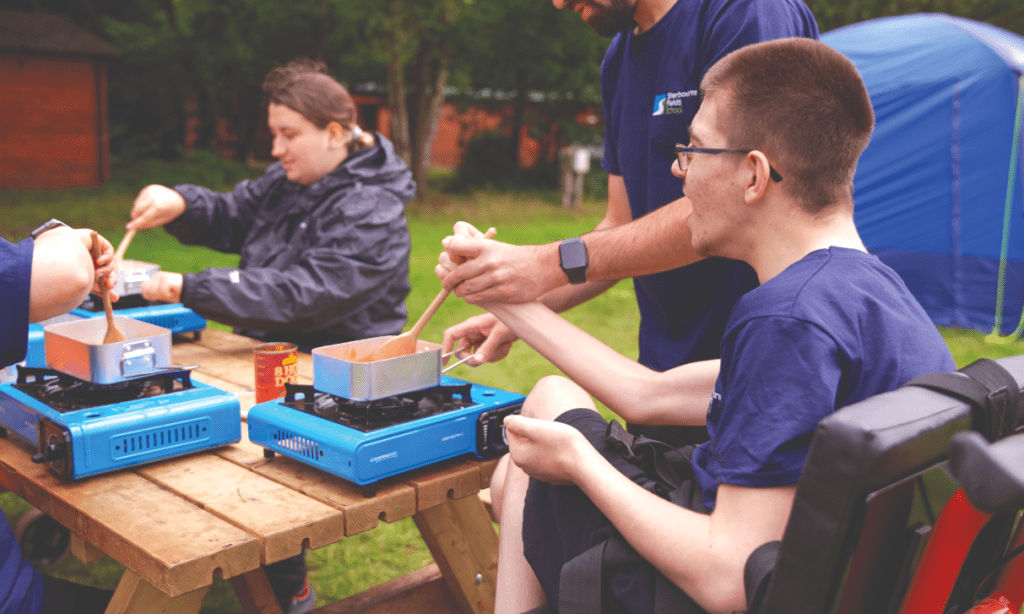
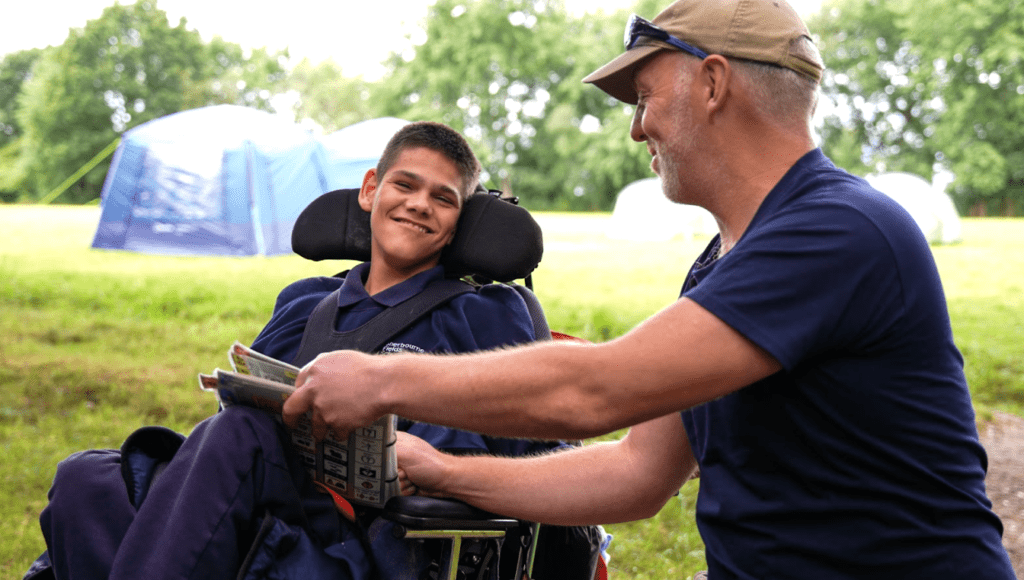
Sherbourne Fields, a Special Education school in Coventry for children from nursery age to post-16, have been running the DofE for ten years. The school has always strived to open the Award up to as many of their students as possible. Thanks to specialist equipment, Kian, an off-road wheelchair user, was able to take part in his Bronze expedition last year: Going camping is a great experience for me. I enjoyed the time away and getting to sleep in a tent. Taking part in the country walk in the offroad wheelchair was my favourite part. It’s really fun and I enjoy going on the adventures outdoors. The off-road wheelchair means I can join in with my friends. I love it. It is the best thing. Headteacher Shivaun Duffy has seen first-hand how accessible adjustments has transformed the young people’s learning outside the classroom experiences: Having new experiences develops our young people’s confidence tenfold. We started running the DofE here so that our young people can be challenged, take part in new activities and to develop independent skills. These young people can do anything with the right resources and the right equipment.


Author: Catherine Wood


Catherine Wood
Catherine Wood is Programme Manager (Additional Needs and Alternative Provision) at The Duke of Edinburgh's Award.
Website: dofe.org
X: @DofE
Instagram: @dofeuk
Facebook: @the-duke-of-edinburgh's-award