
























Disruptive behaviour has sensory roots, argues Karla Auker, and we can make life easier for everyone by observing sensory patterns and anticipating triggers.
Classrooms are busy. Expectations are high. Time is limited. When behaviour disrupts learning, it becomes the focus, and it’s rarely positive. When learning is interrupted by behaviour, it can be intensely frustrating for teachers who have invested time, energy, and hope into creating a lesson that engages and motivates their class. Teachers respond, routines adjust, conversations are had. It can feel draining, time-consuming and negative. Yet for many children, behaviour is not the starting point—it is the signal. Behaviour is a sensory response. When we take a step back and look at how a child’s nervous system experiences their environment, patterns begin to emerge. What once felt unpredictable can start to make sense. And when things make sense, support becomes simpler.
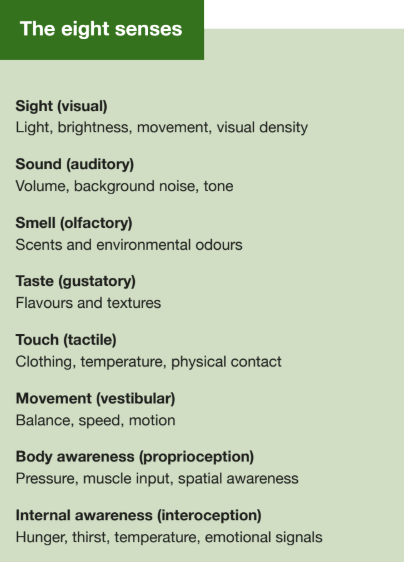
Understanding a child’s sensory profile. Most people know that children are sensory beings, but few realise that every child has a sensory profile, which governs how their nervous system takes in, processes, and responds to information from the world around them and from inside their own body. Think of it as the motherboard of how they experience life. We often think of five senses, but children are constantly processing eight: visual, auditory, olfactory, gustatory, tactile, vestibular, proprioception and interoception.

Some children are sensory-sensitive, quickly feeling too much. Noise, bright lighting, crowded corridors or clothing seams can overwhelm them. Some are sensory-seeking, needing more movement, pressure or intensity to feel regulated and focused. Many are a mix, varying by fatigue, time of day, or environment. There is no right or wrong profile. Every person’s nervous system is simply doing its best to feel safe and balanced. Difficulty arises when sensory overload is interpreted as defiance, and sensory seeking is seen as disruption.
Early warning signs. Before behaviour escalates, quieter indicators often appear. These may include increased fidgeting or movement, covering ears or squinting, irritability during transitions, sudden fatigue or withdrawal, refusal of clothing, food, or tasks without clear explanation, or escalation at predictable times of day. These signs are not misbehaviour, despite traditional classroom management strategies. They are early signals that the nervous system is under strain. Noticing them early allows adults to respond before dysregulation peaks.
Try this in class. Pick one child and observe when they first show these subtle signs. Note what seems to trigger them (a noisy corridor, perhaps, or a bright display, or a scratchy chair), and what helps them self-regulate, such as a quiet corner, deep breathing, or brief movement breaks. Over time, these observations build a pattern you can use to anticipate needs rather than reacting to behaviour alone.
When behaviour is the final stage. By the time behaviour is visible, sensory load has often been building quietly. In the UK, a typical school morning might include a child being rushed to get dressed, hurried to school, reminded about a forgotten lunch box, fluorescent lighting, busy working walls, thirty children in close proximity, chairs scraping, low-level chatter, multiple transitions, and extended periods of sitting. For many pupils, this is manageable. For some, it is almost impossible. So, instead of asking Why does this child have to be different?, consider what sensory input has already accumulated, whether behaviour occurs at predictable times, and how the environment may be contributing. This is not over-analysis or special treatment, it is pattern recognition. Repeated patterns often have sensory roots.
The home-school gap. Teachers and parents often feel they are not on the same page when it comes to recognising a child’s needs. A common tension arises when school reports that a child has been fine all day, and parents describe a complete collapse at home. Some children work hard to manage sensory input during the school day. They hold it together, masking discomfort, and suppressing the need to move or withdraw. At home, their nervous system releases. Sharing observations is not a clash. It builds a picture of a child’s nervous system. Combining insights reduces frustration. Parents may notice hunger or fatigue triggers. Schools may see late-afternoon overwhelm. Constructive communication that recognises a child’s sensory patterns can help prevent repeated behaviour cycles and support smoother days for everyone.
The child who won’t keep his jumper on. Luca is 7. He regularly removes his school jumper despite repeated reminders (initially described as oppositional behaviour). Parents noticed sensitivity to certain fabrics. Looking at patterns revealed tactile sensitivity and heat intolerance; the jumper fabric is coarse, and the classroom is warm. A simple adjustment—allowing uniform flexibility and seating him away from direct heat and near a window—reduces incidents significantly. No additional equipment is required. Just interpretation between school and home that recognises his sensory profile and adapts to meet his needs. Sensory-informed practice does not mean redesigning classrooms or purchasing specialist equipment. Small environmental tweaks can reduce friction and protect teaching time. Harsh lighting can be toned down. Matt laminating pouches reflect less overhead light. Avoid high-density visuals such as walls covered with bright colours and posters in multiple fonts. Allow standing during independent work. Create purposeful errands or brief whole-class stretches. Proactive movement can reduce spontaneous disruption.
After lunch dysregulation. Danie is 8. He tends to become unsettled after lunch. Staff initially see this as inconsistency. Discussion with parents reveals that he finds the lunch hall noise and unpredictability overwhelming. Adjustments include seating at the end of the table, arranging earlier transitions and a short, predictable, calm task. Behaviour incidents reduce. The school day becomes more predictable.
Supporting sensory needs at home. Understanding a sensory profile can seem daunting at first. Start small. Notice when your child is calm and connected. Allow them to readjust calmly after school rather than asking several questions immediately.
Observe what consistently unsettles them. Identify one pressure point in the day. Softening one trigger, or adding one regulating activity before difficulty builds can make a significant difference. Movement before homework, reducing verbal demands when overloaded, or ring-fencing decompression time after school. Confidence grows through observation. Patterns become clearer over time. You don’t need a diagnosis for this—just curiosity and compassion.
Observation. Understanding sensory needs does not require a formal framework, but it does require observation. Observe when the child is most settled. When are difficulties likely? Are they avoiding certain sensations? Or seeking them? Are there patterns across times and environments? Trial one small adjustment. Providing a quieter workspace, a fidget tool, or a brief movement break, and observe shifts. Seating a child by the window or offering a chair cushion may reduce restlessness. Build from patterns. Often, the most time-consuming behaviours are rooted in unmet sensory needs. By addressing the trigger once, you may avoid having to address the behaviour repeatedly.
Not lowering expectations. Removing barriers. Sensory understanding is not about excusing behaviour or reducing standards. It is recognising when a nervous system is under strain. A child who feels physically overwhelmed struggles to access learning efficiently. Small preventative adjustments protect learning time for everyone. Parents and teachers ultimately share the same goal: children who feel settled enough to engage. When behaviour is sensory, decoding the hidden trigger is often the most efficient intervention. We don’t need a diagnosis to begin. Curiosity, pattern recognition, and one manageable change can transform outcomes. When we look beyond behaviour and understand sensory need, everything changes. Not through complexity, but through clarity.


Author: Karla Auker


Karla Auker
Karla Auker is an ex-teacher and neurodiversity educator who supports parents and schools in recognising neurodiverse traits and understanding sensory needs.
Instagram: @neurodiversityparentguide