



















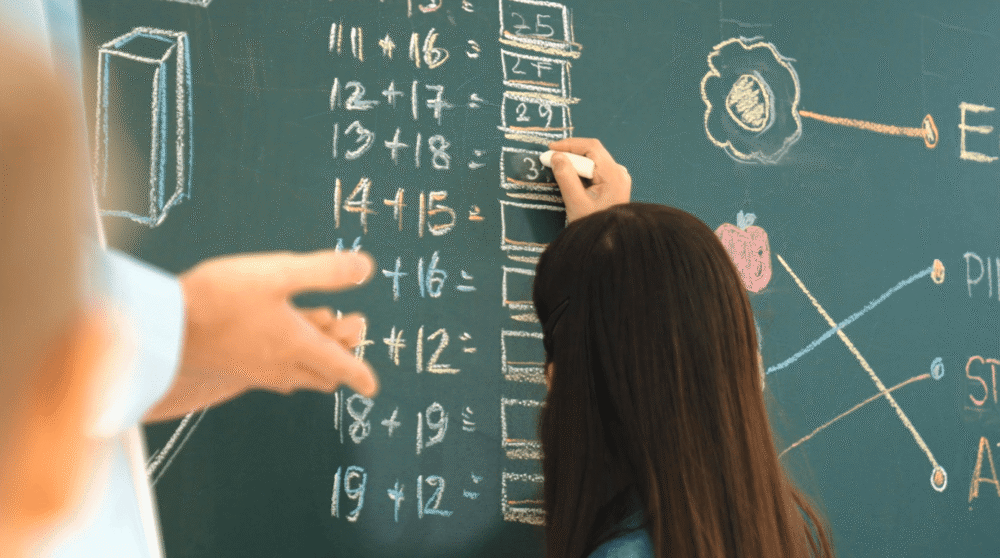
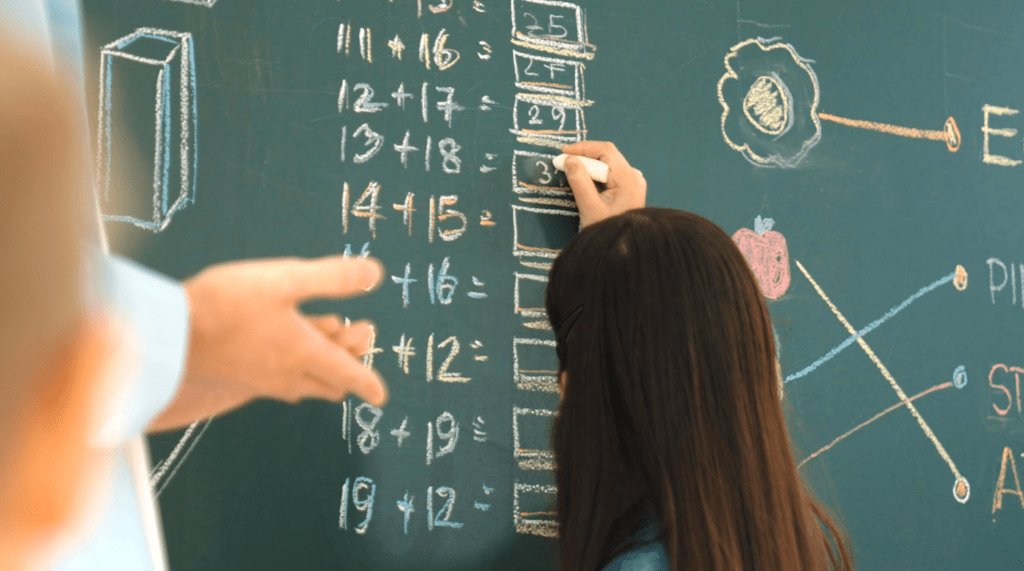
I remember my first ever maths lesson. I was five, and I’d just moved to England from Canada. The teacher drew symbols on the board and asked us what the answer was. Children put up their hands to answer, and they gave correct answers. I was baffled. It took me a few weeks to work out that there was a value system and a code. The number symbols had a value, and the other symbols were a code for an instruction (+,=,-,x). I remember feeling irritated that no one had told me this. By the time I was deciphering this first level of code breaking, more symbols were added, and different words. The teacher used the words ‘plus’, and ‘take away’, and ‘minus’. No-one explained that ‘add’ and ‘plus’ were the same instruction, and ‘minus’ and ‘take away’ were the same instruction. Then, ‘times’ was multiplication, and was followed by division. I didn’t understand anything about these at all, and this situation didn’t change for years.
Faced with problems like ‘six apples cost 30p, so how much do two apples cost?’, I simply didn’t have the code breaking skills to make sense of it. So my primary school years finished, and I still hadn’t gained any traction with this baffling coded value system. Secondary school brought more mathematical misery. It was an extremely negative experience for me. I was told that maths makes sense and it’s a fascinating thing. For me, it was just trauma. I failed Maths O-level three times, and my lack of a maths qualification has caused me serious problems in my career. I did become good at my times tables, and at simple mental arithmetic. But I have still not learned long division or how to do anything else, such as quadratic equations.
However, I did learn that I could remember a number if I said it out loud. What we didn’t know back then was that I couldn’t do maths because I was dyscalculate. Being left-handed doesn’t help either, because our eyes naturally scan from right to left. With words it’s OK because the brain knows them so well, and we can read long words like discombobulate just by recognition. Occasionally I transpose parts of a word. For years I thought vitamin B6 was called pyroxidine, not pyridoxine. But with numbers, there was no such consistency, they could be anything, so I would get them in the wrong order if I needed to copy them from one place to another.

My father worked as a dyslexia specialist. When he asked his colleagues about dyscalculia he was told ‘just get them to check their work‘. This unsatisfactory response demonstrated how little was understood about dyscalculia. I have lived with this all my life. I slipped through the net at school for various reasons, among them the fact that dyslexia was unrecognised until I was about 12 and dyscalculia didn’t even have a name.
Non-dyscalculate people, from my observation, do not need to be told that numbers represent a quantity or an amount. I missed that stage. So by the time I was in the classroom, the basic maths sums on the board were already one codified system (the numbers) interacting with another codified system (the mathematical operators such as +, =, – and x).
A teacher who found maths concepts easy would have had little understanding of the stumbling blocks encountered by a dyscalculate child in their class, and my maths-related anxiety was invisible to my teachers. They couldn’t understand why I had such a disparity in my skills. I was doing very well in every subject for maths. They just assumed I was lazy, and so they felt justified in telling me off. Nowadays our teachers are better trained and more aware, and this progress in teacher training is just great for our children.

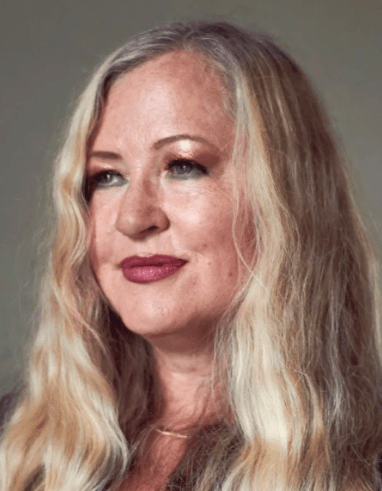
Author: Sue Cook

Sue Cook
Sue Cook has two sons, the older one diagnosed with severe dyslexia at age 6. In researching what could help him, she discovered neurodevelopment, and she now helps others through her books and her website.
Website: brainbuzzz.co.uk