























Our social skills interventions may be limiting our young people’s autonomy over their social preferences, argues Maria Macnab.
Social skills interventions are common in schools for our neurodivergent young people, with and without the direction of EHCPs, and they are often essential in helping our neurodiverse young people to navigate and interact with the neurotypical world. Giving our autistic young people social scripts and responses in their back pocket can be helpful to them and can save a lot of anguish when somebody approaches them with what many would regard as a simple remark.
Hi, how are you? can leave our older autistic students deliberating the question, and asking themselves what is an appropriate depth of response? and why do they want to know?, or I don’t even know how I am. Such small-talk remarks can result in the young person remaining silent, nodding, or mumbling something awkwardly and then quickly avoiding such situations again. Our younger students often feel the same, but maybe with even a higher level of confusion of what this interaction is, and why it is happening.
I have overseen interventions where the idea of small-talk is explained, and simple responses are rehearsed with explicit explanations of why we may respond in this manner.
Without the teaching and explanation of small-talk, are we guilty of modelling masking if, when asked how we are, we respond that we’re fine, even though we’re clearly limping around and streaming with a heavy cold?

I am concerned that we’re in a cycle of social skills interventions which have the wrong objective behind them. Are we rolling out teaching which has little application in the real world and therefore ends up as something else on the timetable, which is ticked off according to whichever programme we are delivering. Isn’t it better to bring a group together and ask them what they’re not understanding, or what they’re avoiding, in social contexts and address that, to make it more meaningful and relevant? How can we expect our most literal students to apply interventions outside the context in which they were learned?
What’s more concerning is our continued desire for neurodivergent young people to learn and fit in with social norms, sometimes even to a point where we may be inhibiting the autonomy of their own personality. We have come a long way in inclusive practice, for example understanding sensory needs and differences and knowing that our autistic young people and adults may need to have a rest from a particular environment, may need tools to support them and may need to avoid some environments altogether. But in my opinion these same inclusive attitudes have not yet reached socialising.
Social connections are an integral part of being human, but we are all still individuals, and our individual idea of how much socialising we need is undoubtedly a result of our neurodivergence, our background and, importantly, our integral personality. Of course we need to support our young people in navigating social situations. We arm them with the tools and the confidence to adapt and make appropriate connections in a range of social contexts, but our interventions mustn’t encourage them not to be true to themselves, to fill them with anxiety or guilt when they would rather choose not to be social.
Early in my education career, I remember being asked to take a year 9 autistic boy out for a social skills intervention. As we walked to a quiet room, he said to me I know why we are doing this….none of you teachers like me sitting on my own and not talking to anybody at lunchtimes….what you all don’t get is that is what I like to do, I know how to talk to people when I need to, but I don’t want to, I don’t want to talk to the people here. This insightful, unprompted response stopped me in my tracks. He was right. Without any evidence to the contrary, who was I to judge how happy he was with his situation? What right do neurotypicals have to judge the social actions or inactions of our neurodiverse counterparts?
I have had a more recent interaction with a couple of parents and their 18 year-old son, who had always had extremely limited social connections to his peers at school, and now university. The parents had high levels of anxiety surrounding this, and they continued to ask their son what was stopping him making friends. What was wrong? What could they do to help? What support could school have put in place? As discussions continued, they explained that they didn’t want him on his own. They expressed that this wasn’t how they were, and they had a fear of him never being able to be an independent adult (despite him now successfully being at university). The crux of it was that the parents could not understand that he could be happy with the levels of sociability that he had. It was far removed from what they needed from socialising. They gauged his happiness, and to a degree his success, on the quality of friendships, and it made them feel better when he demonstrated social interactions. When I spoke to him, he reiterated that he was happy. He was successfully navigating his life and he had a couple of safe online friends he had had for years. He simply did not want a fuller or deeper level of interaction.
I see both these anecdotes as a celebration of independence, autotomy, self-advocacy and not feeling the need to mask and potentially impact mental health.The mindset that we need our young people to be successful socially is not always helped with normalising outcomes on EHCPS, such as ability to find a meaningful friend. Shouldn’t this be a personal choice and not an outcome? Targets and outcomes would be far more supportive if they were designed to aid understanding of neurotypicals, so that interactions with neurotypicals can come with understanding of their worlds. We don’t necessarily need a change in the social aspirations of our neurodiverse young people. More support is required for schools, parents and our young people to understand our young people’s needs and preferences. Let’s listen to them. Let’s celebrate our differences in all areas, including our social preferences. Let us not try to fix them.
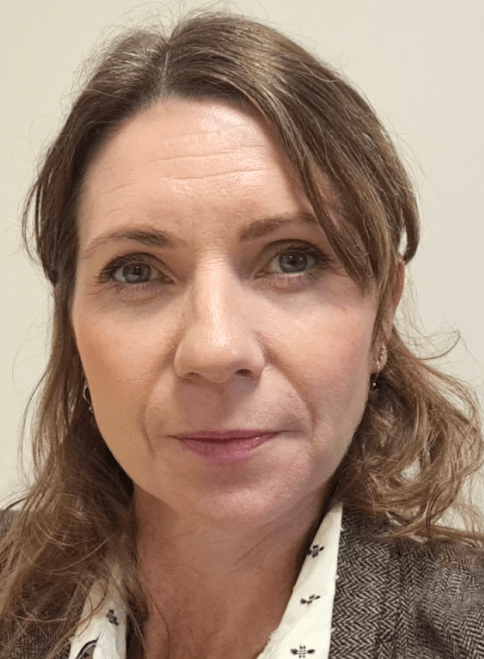
Author: Maria Macnab

Maria Macnab
Maria Macnab is SENCO at Woodview School in Kent, an independent specialist school which is part of the Aspris group.
Website: https://www.aspris.com/
Facebook: @helloaspris
Instagram: @hello.aspris









Hi
I am a SENCo at a mainstream school. I find this article very thought provoking. I look forward to sharing this with colleagues and discussing.
Thank you,