

























Dr Martin Saunders on the reality of EdTech and the ethics of engagement.
Digital resources increasingly shape how pupils and educators interact with the curriculum. As EdTech has evolved, it has inevitably borrowed heavily from another world: gaming and social media. Points, levels, streaks, rewards and progress bars are all now common features in digital learning platforms. What these powerful motivators do is tap into the psychology of reward and achievement, providing instant feedback and visible progress, turning the repetitive practice of old into something more engaging.
But this raises an important question: are we simply motivating learners, or are we borrowing tools specifically designed to manipulate behaviour? For those of us directly involved in designing educational technology, this isn’t just a theoretical debate, it’s something we must confront directly on a daily basis.
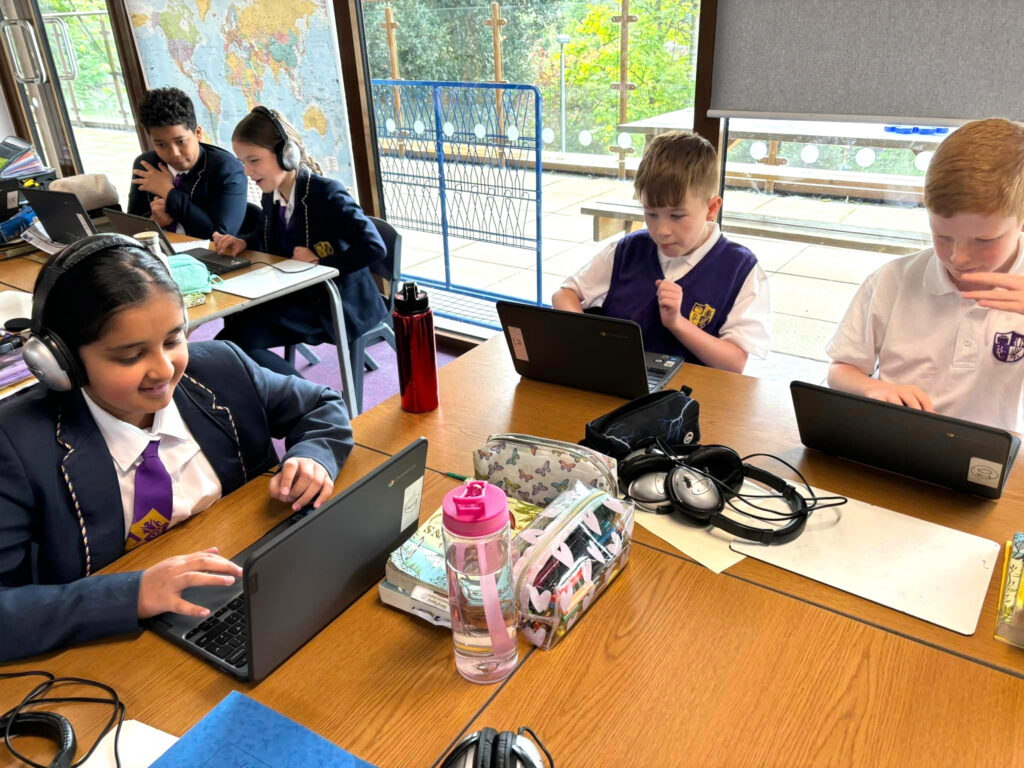
The digital reality for our children. Children today grow up surrounded by digital media competing for their attention. Short-form video platforms, mobile games and social media all operate in what is often described as the attention economy, systems that rely on carefully designed feedback loops to keep users engaged. It would be unrealistic to assume that education exists outside this environment. Pupils are already accustomed to highly interactive digital experiences and traditional forms of repetitive practice, be that spelling drills or times table worksheets, can feel comparatively slow and unrewarding.
EdTech has adopted elements of game design to help sustain engagement. And, when implemented responsibly, these features can transform practice tasks into something that feels purposeful and motivating. Screens themselves are not inherently harmful, and research suggests that the impact of digital technology depends far more on how it is used than on the screen itself. For example, a platform that supports active learning and skills-development is fundamentally different from passive digital consumption.
But the question remains: how far should educational platforms go in using behavioural design to encourage engagement? This ethical question becomes even more significant when we consider pupils with special educational needs and neurodivergent learners where traditional classroom structures can present additional barriers to engagement and practice.
Practice matters. One reason this question is so complex lies in the nature of learning itself. Developing fluency in foundational skills requires repetition. Spelling patterns, phonics rules and multiplication facts only become truly useful when they’re automatic. When these skills are automated, they reduce cognitive load, which means that pupils no longer need to devote working memory to basic decoding or calculation, which in turn frees up mental capacity for higher-level thinking.
In writing, for example, spelling fluency allows pupils to focus on composition and ideas rather than individual word construction. In mathematics, times table fluency allows learners to engage with more complex problem-solving. But reaching that level of fluency requires sustained practice, something that many pupils find difficult to maintain.
Game-based engagement can build the all-important bridge between effort and reward. Immediate feedback, visible progress and achievable milestones make repetition feel purposeful rather than tedious. And this is where the ethical grey area appears. If we deliberately design systems that trigger the brain’s reward mechanisms, are we crossing a line?
The importance of neurodiversity. The question becomes even more significant when we consider the diversity of learners in today’s classrooms. Around one in five children are thought to be neurodivergent, including pupils with dyslexia, ADHD or autism spectrum conditions. These learners often experience the classroom environment differently from their peers. Attention, sensory processing, working memory and information processing can vary significantly and for some pupils, the structure of traditional lessons creates barriers that make learning unnecessarily difficult.
A child with ADHD, for instance, may not lack attention but rather experience competing stimuli pulling focus in different directions. A pupil with autism pupil may find the sensory environment of the classroom with all the bright lights, noise, movement overwhelming before the lesson has even begun. Pupils with dyslexia may struggle with dense text at the same time as demonstrating strong visual reasoning and creativity.
Many neurodivergent learners also have uneven strengths and challenges across different areas of learning. A pupil might read fluently yet struggle with comprehension or written expression. Another might demonstrate remarkable creativity but find spelling or working memory tasks extremely difficult. It’s these barriers that can prevent pupils from accessing the wider curriculum in traditional ways. If spelling or basic number recall is consistently difficult, it becomes much harder to engage with writing tasks or mathematical reasoning. For these learners in particular, repeated practice can be transformative if (and it’s a big if) they are able to sustain it.
Engagement as scaffolding. This is where the responsible use of game mechanics becomes important. If motivational design helps pupils practise foundational skills long enough to achieve fluency, it can reduce barriers that would otherwise prevent access to learning. In this sense, engagement mechanisms act as scaffolding rather than manipulation. Where the distinction lies is in the intention behind the design.
Platforms designed purely to maximise time spent online risk replicating the addictive feedback loops of commercial gaming and social media apps. In contrast, EdTech platforms should be structured around meaningful learning progress and one way of achieving this is through balance.
For example, learning systems can deliberately limit progression pathways rather than encouraging endless gameplay. By allowing pupils to top out at certain levels, platforms can encourage productive practice without creating the expectation of continuous digital engagement. This design choice also reflects an important psychological reality in classrooms. Many children begin learning tasks already expecting to fail and when that expectation takes hold it can quickly become a self-fulfilling prophecy. If pupils believe they are going to struggle or get things wrong, the motivation to invest any effort disappears: why work hard at something that will only confirm that you’re not good at it?
Thoughtfully designed learning experiences can help interrupt that cycle. By managing the way practice is introduced and ensuring pupils experience achievable progress, technology can help children feel capable enough to take the risk of trying. When pupils see that effort leads to improvement, they become more willing to engage and practise the skills they previously avoided. This matters far beyond the technology itself. When pupils experience success through structured practice, it can reshape how they see themselves as learners, building confidence that carries through into other areas of the classroom as well.
Ultimately, this acknowledges a fundamental reality: while practice is essential for learning, unlimited screen time absolutely is not. Responsible EdTech should support learning behaviours and confidence, not simply maximise time spent on a platform.
Designing for inclusion. Responsible EdTech design must prioritise accessibility. Interfaces should be predictable, uncluttered and easy to navigate. Reducing unnecessary cognitive load allows learners to focus on the learning task itself rather than on navigating the platform.
Flexibility is equally important. Adjustable fonts, colour contrast, pacing controls and text-to-speech allow learners to tailor the experience to their own needs and are all features that are particularly valuable for pupils with dyslexia or visual processing differences. Multisensory learning is another powerful advantage of digital platforms. Combining text, audio and interactive elements can reinforce learning through multiple channels, an approach that has strong evidence for supporting dyslexic learners.
Design features intended to support neurodiverse learners often benefit everyone. Clear structure, flexible pacing and multimodal presentation improve learning experiences across the entire classroom.
The responsibility of EdTech. EdTech undoubtedly plays a significant role in shaping and influencing how children learn.
The tools we design inevitably shape behaviour and that means we must be conscious of the psychological mechanisms we use and the outcomes they create. Used irresponsibly, engagement mechanics can encourage excessive screen time or superficial interaction. Used thoughtfully, they can help learners practise essential skills, overcome barriers and build confidence.
For neurodiverse pupils especially, this distinction matters enormously. A well-designed learning platform can transform practice from a source of frustration into a clear pathway towards increased independence and academic success.
Using engagement wisely. The debate about motivation and manipulation in digital learning is unlikely to disappear and nor should it. Healthy scrutiny encourages better design and stronger accountability. But perhaps the most important question is not whether we use behavioural design in EdTech, it’s whether we use it wisely.
If we harness the motivational power of games while maintaining clear boundaries around wellbeing, accessibility and learning outcomes, digital tools are powerful instruments of inclusion.
In a world where children already navigate a constant stream of digital stimuli, educational technology can offer something different: purposeful engagement that leads to genuine learning. And when that learning helps remove barriers for the pupils who need it most, the ethical balance becomes much clearer.

Author: Martin Saunders

Martin Saunders
Dr Martin Saunders is CEO and co-founder of EdShed, providers of educational technology for schools and educators.
Website: edshed.com
Facebook: @educationshed
LinkedIn: @martinsaunders