























Is it possible for PDAers to thrive in school, asks Elizabeth Archer, and what does it take to make that happen?
PDA (Pathological Demand Avoidance) is a term coined in the 1980s by developmental psychologist Professor Elizabeth Newson. It describes autistic people who show an obsessive avoidance of the ordinary demands of everyday life. While PDAers share many traits with other autistic people, the most recognisable feature is a fear-based response to demands, which can make daily life extremely difficult. In the only prevalence study on PDA, it was suggested that around one in five autistic people have a PDA profile. If that estimate is correct, there are around 18,000 PDAers of school age in England today. Many educators tell us, We know something isn’t working—we just don’t know what to do differently. The statistics speak for themselves. Our 2023 parent survey found that 91% of PDA children experience severe anxiety, 85% have experienced emotionally based school avoidance, and 40% have at some point expressed thoughts of ending their life. These figures are devastating, but they aren’t inevitable.
Many PDAers find school extremely difficult, and what a child can manage will vary depending on the environment, the relationships around them, and what else is happening in their life. It’s common for children to mask their difficulties through compliance, only to experience meltdowns later in a safe place. If a child is struggling, they may zone out and quietly disengage at school but be exhausted or distressed when they get home. Other children might seem disruptive or defiant or attempt to leave the classroom or become unable to attend school at all. As a result, PDA children’s needs are often either unseen in school or responded to through disciplinary measures. Many parents struggle to be believed or to access appropriate support. Families may end up with a child who remains on the school roll but attends rarely, or they may withdraw their child from school altogether—not through choice, but because it feels like the safest option for their child’s mental health.
For PDA children who do stay in school, it’s common to experience burnout. They might self-isolate, control their eating, or self-harm to try and regain a sense of control or autonomy. We often hear from families about children who stop leaving their rooms, struggle to speak, or cannot eat with others because school has become overwhelming.
We also frequently hear from teachers that generic autism training has not helped them to support PDA children. As one teacher told us, Everything I was trained to do for autism made things worse. Once I understood PDA, it changed how I saw the child—and myself.
Many autism strategies used in schools rely on predictability, routine and rules. For some autistic children these approaches are supportive, but for others they can make things worse. Interventions such as rigid timetables, non-negotiable rules, behaviour charts, and sanctions can create a lot of anxiety for PDAers because they are often experienced as a threat to their personal autonomy, and their resulting distress can then be wrongly interpreted as defiance.
School also stacks a lot of demands at the same time, which can have a cumulative impact on PDA children. Children don’t get to choose where to sit, when to speak, what to wear, how to complete work, when to go to the toilet, who to be with and how to behave. For someone who struggles with everyday demands this can be overwhelming and make it impossible to concentrate on doing the one thing they are in school to do: learn.
Fundamentally, supporting PDA children in education means working together to reduce anxiety so they feel safe enough to learn. Trust is the foundation of learning, and everything begins with relationships. It makes a huge difference when the connection with students and their families is prioritised, and PDA children are more able to engage when they feel heard and respected—and if they are involved in decisions about their learning and what is manageable for them. Communication is key here, and if an adjustment can’t be made it’s important to explain why, and to be open minded when a student can’t meet a suggested expectation.
It’s crucial to recognise when anxiety is causing children to behave in a way which might seem avoidant or oppositional, and to build trust by approaching these moments with curiosity and empathy rather than disciplinary measures. A low-arousal approach can help, and involves using a calm tone of voice, relaxed body language and gentle pacing to reduce pressure. When situations do begin to escalate, it can help to be flexible and use humour, roleplay, or a different member of staff to create a reset. Supporting PDAers involves balancing give and take, and allowing extra processing time is vital and can really help to take the pressure off. Consistency across staff teams also matters so that students are not forced to repeatedly explain their needs.
Anxiety can be addressed by adapting the learning environment and offering genuine choices around what work is completed, how, when, where and with whom can significantly reduce anxiety. Timetabling can have a big impact, and co-creating flexible plans with students can be really effective. For example, it’s better to have a couple of hours of engaged learning, than a full day in class spent in shutdown with anxiety. It’s also worth asking whether every lesson needs to be attended, or if planned downtime or alternative activities could support both wellbeing and engagement.
Sensory sensitivities can also heighten anxiety for many PDA children, and there a range of simple adjustments which can make this easier for them to manage. Sensory tools or movement breaks can make a massive difference, or access to safe spaces which allow students to decompress without drawing attention to themselves.
Focusing on a student’s interests where possible might also help the work to feel more meaningful, and also avoid the implicit question of “what’s in it for me?” Some students find traditional written work overwhelming and might need alternatives such as typing, using a whiteboard or making voice recordings to make learning more accessible. Visual supports might also be helpful, as long as they aren’t used to enforce rigid plans or schedules. Many PDAers also need support with executive functioning, and breaking work into smaller, manageable steps can help with planning and organisation. Older students may need help managing time, navigating the learning environment, or organising belongings. It’s best to negotiate these strategies together to find something that works and is sustainable.
Finally, reflective practice is essential. Every child is different and their needs will change over time—what works one day may not work the next. Being willing to adapt and try again is part of providing effective support. When things don’t go to plan, acknowledging this matters. A simple apology—even on behalf of someone else—can repair trust and help students feel that the system is fair and responsive. Maintaining open and transparent communication with families is essential, and working together to resolve any difficulties can support trust and joint problem solving. As one teacher reflected after PDA training: “Once we stopped trying to make the child fit the system, and started shaping the system around the child, everything shifted.”
When school isn’t possible
Even with skilled, flexible support, there are times when school may be simply too much, particularly following periods of burnout. Recovery takes time, and pushing too hard can undo progress. For these children, fractional timetables, hybrid models or education other than at school (EOTAS) can support gradual re-engagement with learning. The difficulty is that access to these options is inconsistent and often delayed until crisis point. Earlier, flexible interventions that prioritise recovery could help children return to education more effectively than attendance-focused approaches that measure success only by presenteeism.
Policy needs to give teachers the freedom to work in this way. The current emphasis on attendance, an overcrowded curriculum, and inflexible school environments makes it harder to meet PDAers’ needs even where staff are highly motivated. Many schools are doing exceptional work, but there are limits without wider change.
Families and professionals are calling for practical solutions: better training, earlier identification, flexibility within policy frameworks and investment in approaches that reduce anxiety rather than escalate it. At the PDA Society, we see every day that PDAers can learn, thrive and flourish when environments adapt. We also see how exhausted families and educators are with systems which do not yet support this work.
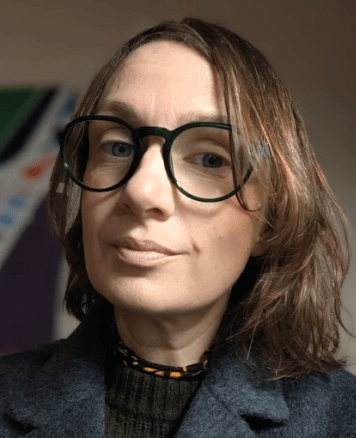
Author: Elizabeth Archer

Elizabeth Archer
Elizabeth Archer is CEO of PDA Society, the national autism charity working to improve understanding, recognition and support for PDAers across education, health and social care.
Website: pdasociety.org.uk
Facebook: @thepdasociety
Instagram: @pda_society
LinkedIn: @pda-society